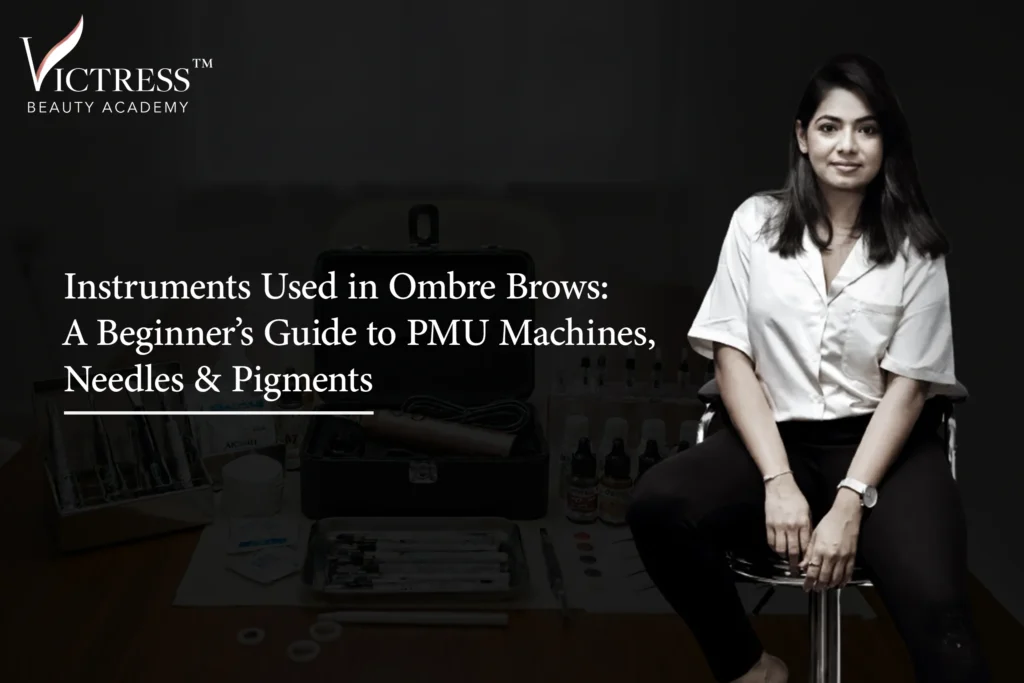
Instruments Used in Ombre Brows: A Beginner’s Guide to PMU Machines, Needles & Pigments
Learning how to create beautiful ombre brows is not only about technique. It also depends on the tools you use. When you understand your machine, needles and pigments, your work becomes more controlled and consistent.
For students who are beginning their journey in permanent makeup, it is important to learn what each instrument does and why it matters. This guide explains the essential tools used in ombre brow treatments in simple language so beginners can understand and practise with confidence. If you want structured learning and hands-on practice, enrolling in an ombre brow training, a powder brow course, or even a microblading training course can help you build these skills properly.
What Ombre Brows Need From Your Kit
Ombre brows, also known as powder brows, create a soft gradient effect. The front of the brow appears lighter, while the tail is slightly darker and more defined. This look is achieved through controlled shading rather than individual hair strokes.
To create this effect properly, artists need a few key tools:
- A stable PMU machine that offers smooth and controlled movement
- The correct cartridges or needle groupings for shading
- High quality pigments that heal well in the skin
- Clean disposable tools to maintain proper hygiene and safety
Each of these elements plays a role in achieving smooth, even shading.
PMU Machines: What Beginners Should Know
Permanent makeup machines are the main tools used to implant pigment into the skin. While there are different styles available, beginners usually encounter two main types.
Rotary Machines
Rotary machines are widely used in modern permanent makeup.
They are lightweight, quiet and easy to control. The smooth motor movement makes them ideal for shading techniques such as ombre brows. Many rotary machines also support disposable cartridges, which improves hygiene and makes the setup faster.
Because they are simple to handle and offer consistent movement, rotary machines are often recommended for beginners during ombre brow training.
Coil Machines
Coil machines are slightly heavier and produce a different vibration during use. Some artists prefer them for certain techniques, particularly traditional tattoo work.
However, for soft shading techniques like ombre brows, rotary machines are usually easier to manage, especially for students who are still learning.
What to Look for in a PMU Machine
When selecting a machine, beginners should check a few basic features:
- Adjustable speed settings for better control
- Compatibility with disposable cartridges
- Smooth operation with minimal vibration
- Reliable build quality and service support
A well functioning machine makes the learning process much easier.
Cartridges and Needles: Understanding the Basics
Needles are responsible for depositing pigment into the skin. They come in different groupings and sizes depending on the technique being used.
For ombre brows, shading needles are used instead of hair stroke needles.
Common Needle Groupings for Ombre Brows
Round Shader (RS)
Round shader needles are commonly used for detailed shading work and smaller areas of the brow.
Flat or Magnum Shaders
These needles have a bigger surface area and may deposit pigment more effectively over broader areas of the brow.
Needles developed for hair stroke techniques, such as round liners or microblading blades, are rarely utilised to generate the powder look found in ombre brows.
Understanding Needle Sizes
Needle sizes usually refer to either the diameter of the needle or the number of needles within the grouping.
- Finer needles are useful for lighter, softer shading
- Larger groupings deposit more pigment in fewer passes
With practice, artists learn how needle size affects pigment saturation and shading softness.
Practical Tips for Beginners
- Always use sterile, single use cartridges
- Never reuse needles under any circumstances
- Practise on artificial skin to understand pigment flow
- Adjust machine speed and needle depth instead of repeatedly passing over the skin
Learning how needles interact with the skin is an important part of any powder brow course.
Pigments: Choosing the Right Colours
Pigments are the colours implanted into the skin during the procedure. Choosing the correct pigment is essential for natural looking results.
Types of PMU Pigments
The majority of professional pigments used in permanent makeup are divided into two categories:
- Iron oxide-based pigments are widely used in cosmetic tattooing.
- Organic pigments can provide higher colour intensity.
Some pigment formulae also include titanium dioxide, which is commonly used to brighten particular hues.
Many professional companies also provide vegan or synthetic formulae based on the artist’s preferences.
Important Factors When Choosing Pigments
Colour stability
Reliable pigments maintain their tone after healing and fading.
Undertones
Every pigment contains warm or cool undertones. Matching this to the client’s natural brow colour and skin undertone helps prevent unwanted colour shifts.
Fitzpatrick skin type
Darker skin tones may require specially formulated pigments to ensure the colour heals correctly.
Mixing and Diluting Pigments
Artists sometimes dilute pigments with sterile saline to create softer shading during the first passes.
Always follow the manufacturer’s instructions when mixing pigments. It is also useful to note down mixing ratios so that results can be repeated later.
Patch Testing and Allergies
If a client has sensitive skin or a history of allergies, a patch test should be performed before treatment.
When there are medical concerns, it is always safer to advise the client to consult a doctor before proceeding.
Other Essential Tools for Ombre Brow Treatments
In addition to machines, needles and pigments, several supporting tools are required for safe and organised work.
Basic Supplies Every Beginner Needs
- Disposable gloves and protective aprons
- Sterile single use cartridges and needle tips
- Pigment rings or small pigment cups
- Micro swabs and applicators
- Brow mapping tools such as calipers or brow pencils
- Skin cleansing solutions and antiseptic wipes
- Topical anaesthetic products approved for PMU use
- Aftercare ointments recommended for healing
Proper waste disposal is also essential. A sharps container must be used for needles, and clinical waste bins should be used for contaminated materials.
Hygiene and Safety Practices
Hygiene is a critical part of permanent makeup.
Artists should always:
- Work on clean, disinfected surfaces
- Wear fresh gloves during the procedure
- Change gloves if they touch non sterile items
- Dispose of used cartridges immediately in a sharps container
- Maintain detailed client records and consent forms
These practices protect both the artist and the client.
How Tools Affect Technique
A soft ombre effect depends on the correct balance between machine settings, needle choice and pigment saturation.
For example:
- A lower machine speed with a small round shader and diluted pigment creates very soft shading
- A larger shader with stronger pigment saturation produces a more defined powder brow look
During training, students usually practise on synthetic skin before working on live models. This allows them to understand how small adjustments in equipment affect the final result.
Aftercare and Pigment Retention
Aftercare is important for proper healing and long lasting results.
Clients should be advised to:
- Keep the brow area dry for the first 48 hours
- Avoid heavy exercise, swimming and sunbeds for about two weeks
- Use only the aftercare product recommended by the artist
- Expect the colour to appear darker at first before softening during healing
Ombre brows gradually fade over time, so most clients require a touch up between six and twelve weeks after the initial procedure.
Lifestyle, skin type and sun exposure can all affect pigment retention.
Safety, Regulations and Professional Training
This blog is intended to describe the instruments used in ombre brow operations; nevertheless, it does not substitute professional training.
Anyone interested in permanent makeup should take an official ombre brow training from Victress Beauty Academy before working on customers. Artists who wish to understand hair stroke methods frequently take a microblading training course as well.
Professional practice requires compliance with proper hygiene standards, insurance requirements and local restrictions.
Beginner Checklist Before Practising
Before starting work on a model, it is helpful to check a few important things:
- The machine is clean and functioning correctly
- Sterile cartridges are ready and unopened
- Pigments are selected and prepared
- Client consent and medical history forms are completed
- The workspace is clean and properly organised
A consistent setup routine helps beginners develop safe working habits.
Final Thoughts
Ombre brows require patience, practice and the proper instruments. When pupils grasp how machines, needles and colours interact, learning becomes much easier.
With adequate training, safe hygiene measures and consistent practice, beginners can progressively gain the control required to create smooth, balanced and natural-looking powder brows. Many artists start with structured ombre or powder brow training and then progress to microblading instruction to give a broader choice of brow styles.
Mastering the tools is the first step toward becoming a competent permanent makeup artist.
FAQs
What machine is used for ombre brows?
Most artists use a PMU rotary machine for ombre brows. This machine moves smoothly and helps place pigment gently into the skin. It is also easier for beginners to control when they are learning in an ombre brow training or powder brow course.
What needles are used for ombre brows?
Ombre brows usually use round shader needles or small shader cartridges. These needles help spread the pigment softly inthe skin. This creates the soft powder effect that ombre brows are known for.
What pigment is used for ombre brows?
Artists use special PMU pigments made for eyebrow tattooing. These pigments are safe for the skin and are made to fade slowly over time. The artist chooses a colour that matches the client’s skin tone and natural brow colour.
Can beginners learn ombre brows easily?
Yes, beginners can learn ombre brows with proper practice and training. Many students start by taking an ombre brow training or a powder brow course where they learn how to use machines, needles and pigments safely. Some students also take a microblading training course to learn more brow techniques.